Free Ground Shipping
On Orders Over $250
On Orders Over $250
Sigma Clamping Lever Knob (2G) — Lock the Bar, Hold the Measurement A measuring bar that creeps mid-cut quietly ruins repeat work — the first tile'...
View full detailsMontolit Handle Assembly for 75P5–161P5 — Big-Format Scoring Power, Restored On the larger Masterpiuma cutters, a smooth-gliding handle is what kee...
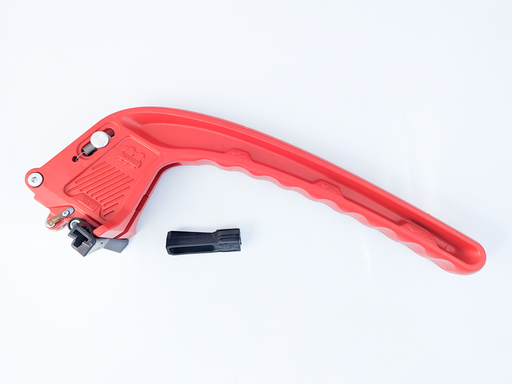
View full detailsMontolit Masterpiuma Italica Handle (502P5IT) — Bring Back Smooth, Accurate Scoring When a Masterpiuma Italica starts leaving uneven scores and the...
View full detailsMontolit Masterpiuma Italica Handle (501P5IT) — Restore Factory-Fresh Scoring The scoring handle is the heart of a Masterpiuma Italica — it's where...
View full detailsMontolit Masterpiuma P5 Extension Guide (63P5–93P5) — More Reach for Oversized Tile When the tile is longer than your side square, you're stuck cla...
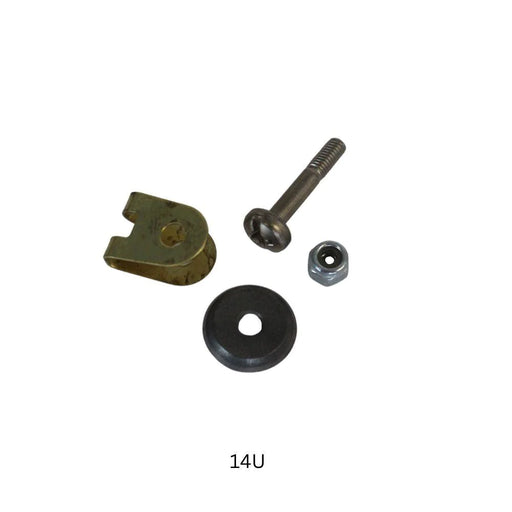
View full detailsSigma 14U "UP" Scoring Wheel — Clean Scores for Series 4 Pull Cutters Your Series 4 UP cutter only scores as well as its wheel. The Sigma 14U is th...
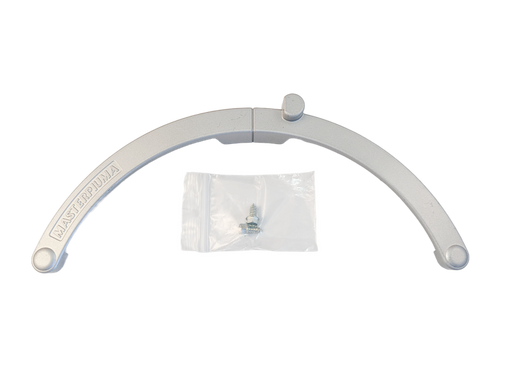
View full detailsMontolit Guide Connector Arch (P5) — Keep Your Rail Dead Straight On a wide cut, the smallest bow in the guide rail throws your score off line — an...
View full detailsUnderstanding the basic pieces of these machines is necessary before getting into the intricacies of tile cutter parts. A tile cutter's basic components are the base, handle, breaker mechanism, and cutting wheel. While the cutting wheel scores the tile's surface to produce a clean break, the base offers the tile stability and support during the cutting process. The breaker mechanism makes it easier for the tile to separate along the scored line, while the handle permits regulated pressure and movement.
The cutting wheel—sometimes referred to as the scoring wheel—is perhaps the most important part of a tile cutter. Usually composed of sturdy materials such as tungsten carbide, the cutting wheel moves in a circular motion across the tile's surface, producing an exact scoreline. The intended cut is easily breakable due to the tile's weakness as a result of this scoreline.
The base of the tile cutter supports the tile when cutting it. To guarantee precise and straight cuts, it has fences or guide rails. Because of the guide's adjustability, tile shapes and sizes can be customized.
A tile cutter's handle gives the operator leverage and control over the cutting process. It has a pressure bar attached to it that pushes down on the tile to make sure the cutting wheel makes good contact with the surface.
Tile cutter parts need to be maintained regularly for maximum performance. This includes lubricating moving parts to guarantee smooth performance, cleaning the cutting wheel to minimize dirt buildup, and looking for any indications of wear or damage. Because of normal wear and tear, several parts of the tile cutter will eventually need to be replaced.
The cutting wheel, which scores the tile, is a heavily used part that needs to be changed regularly to preserve cutting accuracy. Constant use can cause the pressure bar to deteriorate or deform, therefore, it needs to be replaced to maintain constant pressure during cutting. The accuracy of the cuts may be hampered if the guiderails are twisted or worn. The tile cutter can be made to align and cut precisely again by replacing the guide rails.
When it comes to tile installation, accuracy is a must. To produce results of a professional caliber, one must have a complete understanding of the components and functions of tile cutters. Your tile cutter may continue to be a dependable partner in your projects, producing perfect cuts with each usage, if you make an investment in high-quality tools and carry out routine maintenance.